
A species thought to be lost forever, the Bangka slow loris, has been found! A newly published scientific study confirms that the venomous primate has been rediscovered in Indonesia after being lost to science for nearly a century.
The Bangka slow loris is a small, nocturnal, tree-dwelling primate with reddish-brown fur, a pale facial mask and massive, round eyes adapted for the dark. It creeps slowly and silently through the canopy. Like other slow lorises, it is one of the world’s only venomous mammals. It produces a toxic secretion from specialized glands near its elbows, raises its arms when threatened, licks the toxin to mix it with saliva and delivers a painful — and potentially severe or life-threateningly allergenic — bite via a specialized forward-projecting “toothcomb.”
First described in 1906 and recognized as a distinct species in 2013, the last formal scientific records of the Bangka slow loris on Bangka Island (off the eastern coast of Sumatra) dated back to the early 1930s. It was classified as ‘Lost’ In 2020, when the International Union for Conservation of Nature (IUCN) listed the species as critically endangered and possibly extinct.
But local residents and wildlife workers knew the animal well. Data compiled by the Alobi Wildlife Rescue Center documented more than 90 individual Bangka slow lorises between 2015 and 2025. The findings were officially published in the scientific journal Spixiana in October 2026.
Of the 90-plus rescued animals, 86 recovered and were safely released into protected natural forest habitats on the island.
Though rescued and protected, the lorises are still facing severe pressure from human-wildlife conflicts and, more urgently, from habitat destruction: rapid land clearing, expanding oil palm plantations, settlements and extensive tin mining on Bangka Island. Conservationists are pushing for stronger legal protection for Bangka’s remaining natural forests.
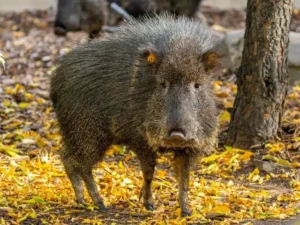
Animals thought to be extinct known as Lazarus species—are creatures that disappeared from scientific records for decades or millions of years before being found alive again. They are known as Lazarus species. Famous examples include the Coelacanth, Takahē, and Chacoan peccary.
